by: Jordan Ashby
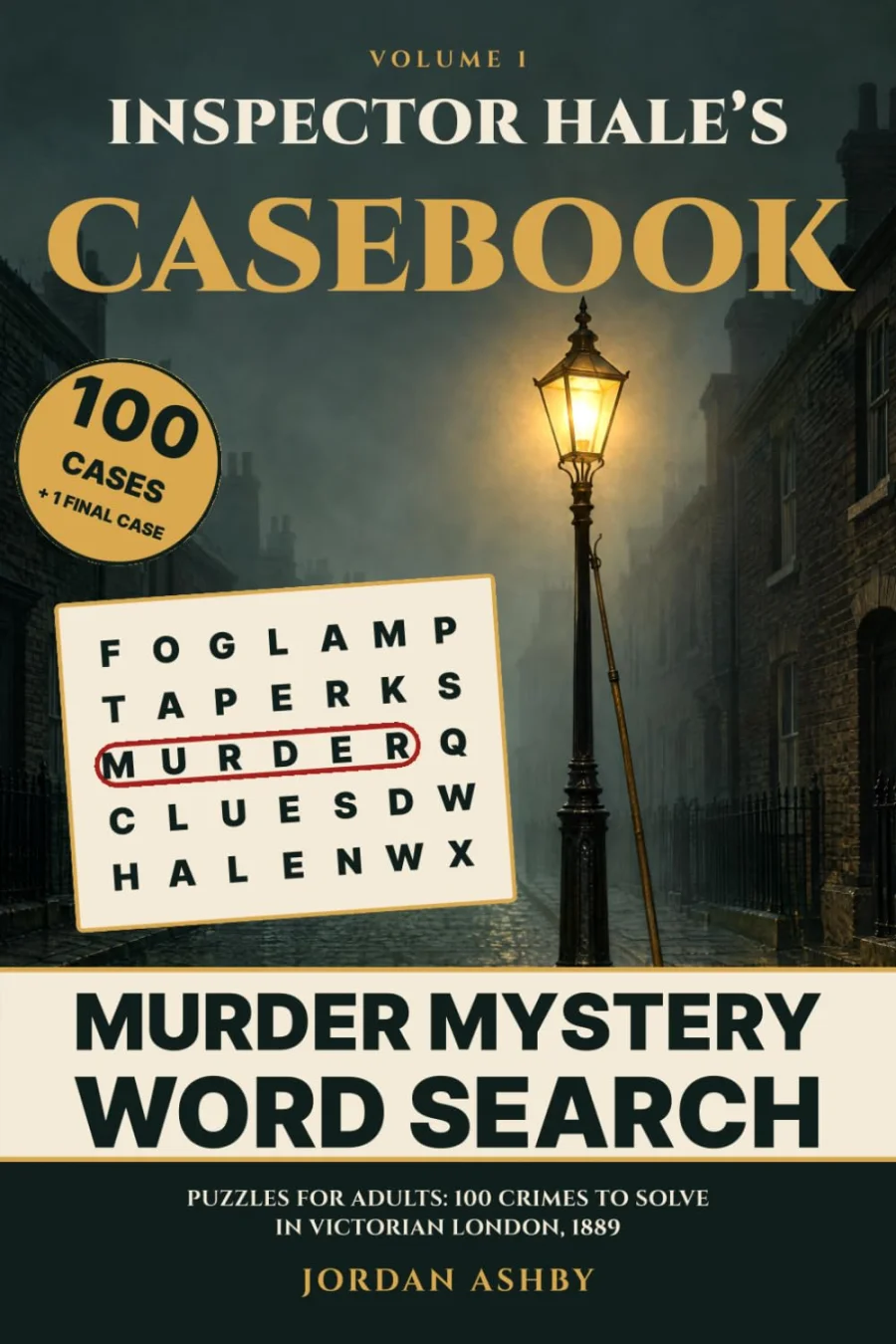
Inspector Hale’s Casebook
Murder Mystery Word Search Puzzles for Adults: 100 Crimes to Solve in Victorian London, 1889
Share this book
Free sample pages
Solve Inspector Hale’s first four cases
Real pages from the book, free to print. Try them and you’ll know if the book is for you.
- How to play and the inspector’s introduction
- Cases 1 to 4: Two Lumps of Sugar, Ink Still Wet, The Cooling Room and The Second Key
- The verdicts and solved grids for all four
Check your inbox
Click the link in the email and your pages open straight away. If it hasn’t arrived in a few minutes, check your spam or promotions folder.
Sent to
First you’ll get one email to confirm your address. Click the link in it and your pages are ready to download.
Details
- Format
- Paperback
- Pages
- 166
- Size
- 6 × 9 in
- Language
- English
- Store
- Amazon.com
- Shelf
- Murder mysteries and puzzles
About the book
One hundred Victorian crimes, each with a word search. The letters you don’t use give you the clue that cracks the case.
London, 1889. Detective Inspector Edwin Hale writes every case in a battered leather notebook before the trail goes cold. Read what happened and who was there, then solve the grid. The leftover letters spell out one clue. Weigh it against what the suspects say, and write the culprit’s name at the foot of the page.
A colonel dies of arsenic at his desk in Bedford Square. A bridge keeper is found drowned below his tollhouse. An ice merchant is found shut in his own ice well, and a fireworks maker dies in his mixing shed on the Fifth of November. Each case fits on a single page, and everything you need to solve it is on that page.
Inside the book
- 100 cases, one per page: what happened, three or four suspects and a 10x10 word search
- A hidden clue in every grid, spelt out by the letters you don’t use
- Three parts that get harder as you go: words run across and down, then diagonally too, then in every direction, backwards included
- Ten starred cases with a secret of their own, which comes together in a final bonus case, The Lamplighter
- A verdict for every case at the back, explaining who did it and why, plus every solved grid
- A notes page for your own theories
More than a list of words
The grid doesn’t hand you the answer. It gives you one clue, and you still have to reason it out: perhaps an alibi that doesn’t hold, or a detail only the guilty party could know. Every case has been checked so that the clue and the suspects point to one culprit and no one else.
The crimes are classic and cosy. There is poison in the teacup and fog on the river, but nothing gory.
Who it’s for
Word search fans who want a puzzle with a point, and readers who love classic Victorian detective stories. A case takes one page, so it fits nicely into a tea break. It also makes a good present for the puzzle lover in the family.
Open the casebook at Case 1, and keep an eye out for a burnt-out lamplighter’s taper.
Questions and answers
How does Inspector Hale’s Casebook work?
Each case is one page: read what happened and who was there, then solve the 10x10 word search. The letters you don’t use spell out one clue. Weigh it against what the suspects say and write the culprit’s name at the foot of the page.
Do the leftover letters spell the killer’s name?
No. They give you a clue, and you work out who did it from what the suspects say. Each of the 100 cases has been checked so that the clue and the suspects point to one culprit only.
How hard is it?
It gets harder in three parts: first the words run across and down, then diagonally too, and in the last part in every direction, backwards included.
What’s inside?
100 cases set in London in 1889. Ten starred cases share a secret that leads to a final bonus case, The Lamplighter. At the back there is a verdict for every case, every solved grid and a notes page. Each case fits on a single page, and everything you need to solve it is on that page. 6 x 9 inch paperback, 166 pages.
Who is it for?
Word search fans who want a puzzle with a point, and readers who love classic Victorian detective stories. The crimes are cosy: poison in the teacup and fog on the river, but nothing gory. A case takes one page, so it fits into a tea break.
A look inside
One hundred Victorian crimes, one page each
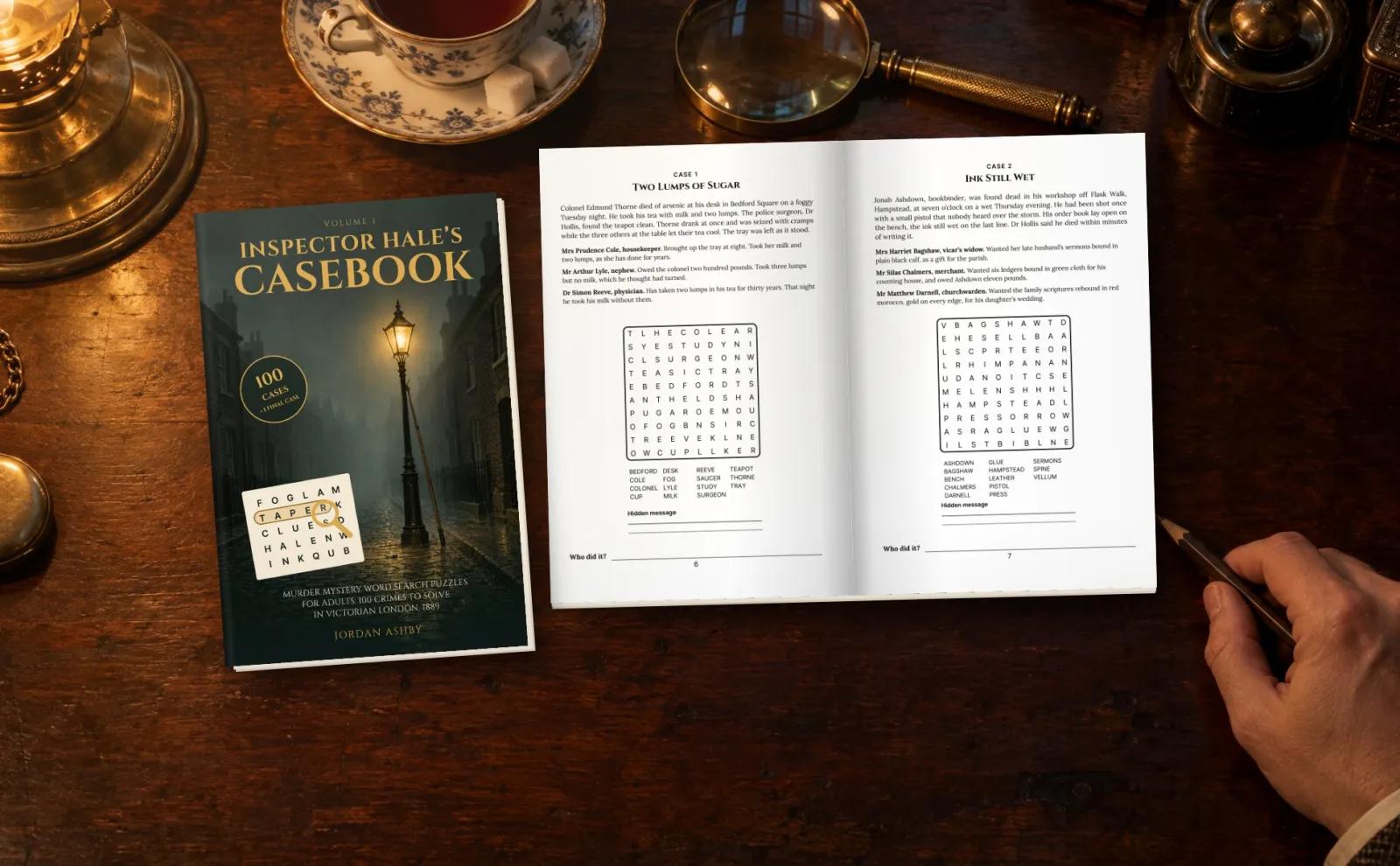
London, 1889. Detective Inspector Edwin Hale writes every case in his notebook before the trail goes cold. Read what happened and who was there, solve the word search, and the leftover letters give you one clue. Then write the culprit’s name at the foot of the page.
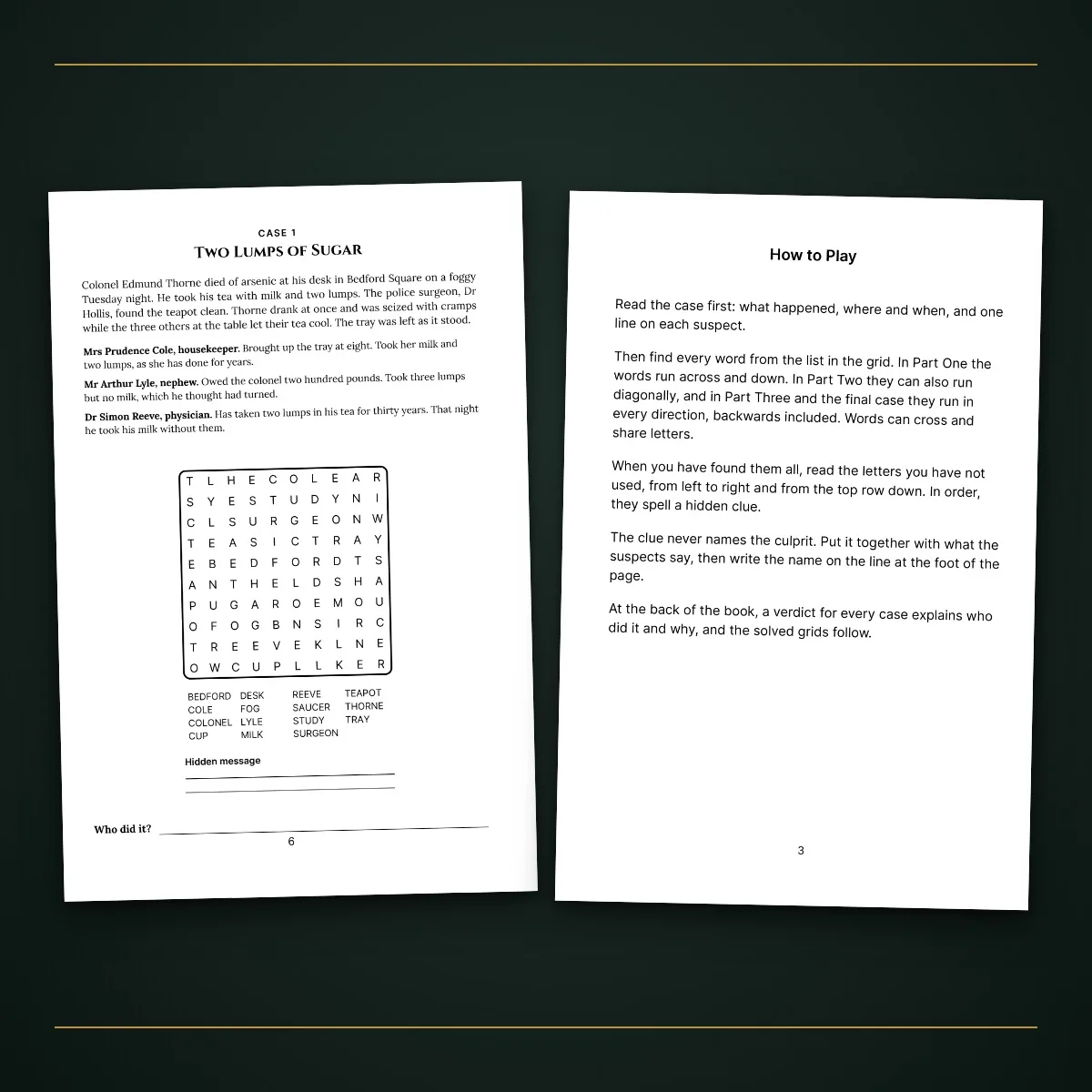
The grid hands you one clue
Read the case, then find every word from the list in the grid. The letters you haven’t used, read from left to right and from the top row down, spell out one clue. The clue never names the culprit: you weigh it against what the suspects say, and only one of them fits. Every case has been checked so that the clue and the suspects point to one culprit and no one else. On the left, the first case as it is printed. On the right, the How to Play page.
Inside the casebook
-
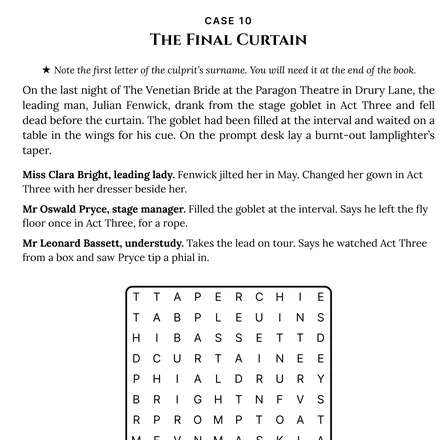
Starred cases
Ten cases carry a star. Note the first letter of each culprit’s surname: you’ll need them at the end.
-
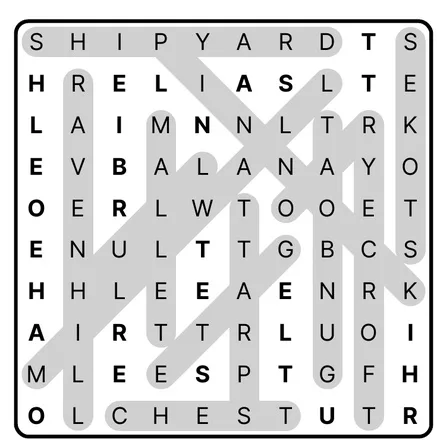
Three parts
The grids get harder: across and down, then diagonally too, then in every direction, backwards included.
-
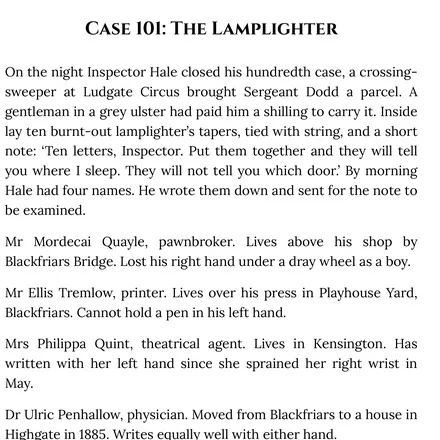
Case 101
The ten letters lead to a final case, The Lamplighter, with a larger 15x15 grid.
-
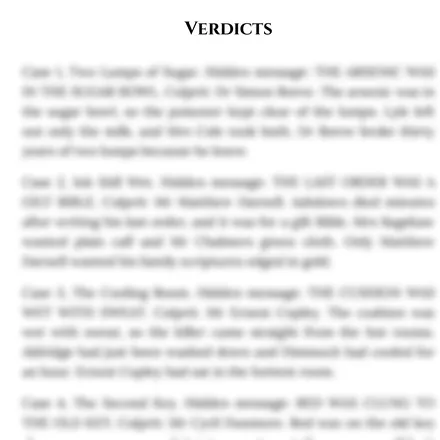
Verdicts
At the back, a verdict for every case explains who did it and why, followed by every solved grid.
Compare the books
This book 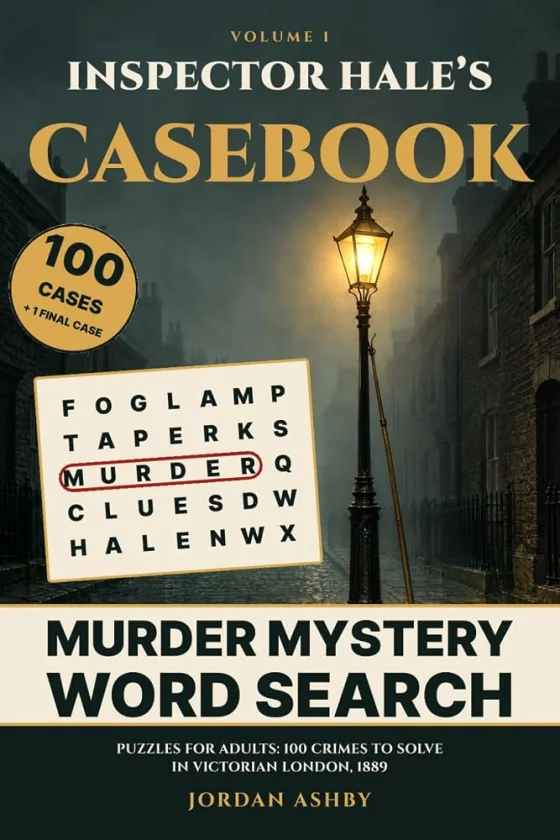 Inspector Hale’s Casebook | Twenty-Four Days to Catch a Killer | |
|---|---|---|
| The mystery | 100 short cases, one per page | One murder, followed for 24 days |
| The setting | London, 1889 | A snowbound country house, 1887 |
| Word searches | 100 cases, plus a final case | 24 for the case, plus 12 extra |
| Grid size | 10x10, and 15x15 for the final case | 12x12 |
| Your job | Name the culprit in every case | Name the killer, weapon, room and motive |
| At the back | Every grid solved, plus a verdict for each case | Every grid solved, plus the full story |
| Pages | 166 | 84 |
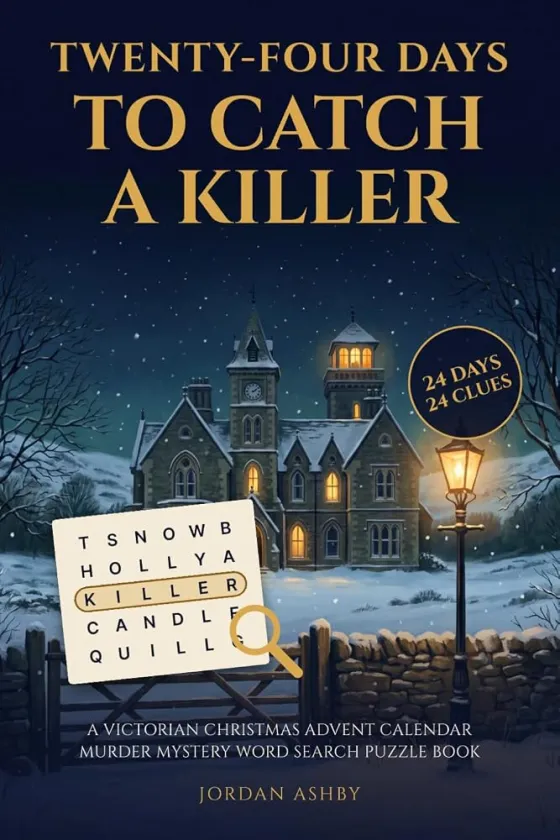

A case for every tea break
Each case fits on a single page, so you can solve one on a train, or read it out to a friend and see who spots the culprit first. The crimes are classic and cosy: poison in the teacup and fog on the river, but nothing gory.