by: Emily Del Santo
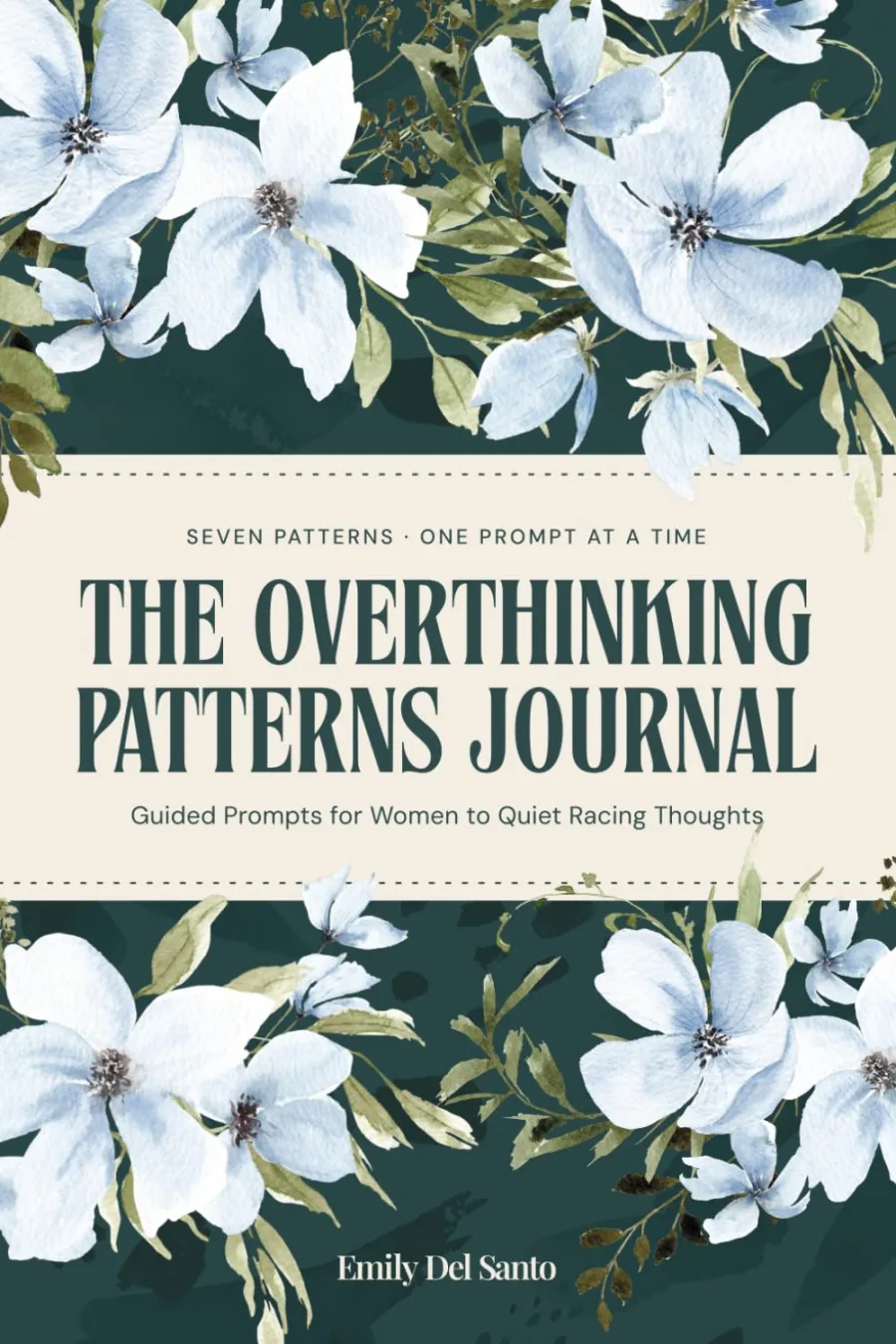
The Overthinking Patterns Journal
Guided Prompts for Women to Quiet Racing Thoughts
Share this book
Free printable pages
Printable Notice It Pack
- 2 Notice It Log pages: date, what triggered it, how you responded and one small step next time
- A line at the top of each log for the pattern you're noticing
- 7 Section Reflection pages, one for each pattern
Check your inbox
Click the link in the email and your pages open straight away. If it hasn’t arrived in a few minutes, check your spam or promotions folder.
Sent to
First you’ll get one email to confirm your address. Click the link in it and your pages are ready to download.
Details
- Format
- Paperback
- Pages
- 129
- Size
- 6 × 9 in
- Language
- English
- Store
- Amazon.com
- Shelf
- Journals and workbooks
About the book
A conversation keeps replaying. A decision keeps circling without landing. A mistake from months ago shows up again at midnight. The Overthinking Patterns Journal gives that overthinking somewhere honest to go, without clinical language or a promise to switch it off for good.
What's inside:
- Seven guided sections for the patterns most people recognise: replaying conversations, fearing judgment, getting stuck on decisions, dwelling on past mistakes, imagining worst-case scenarios, carrying other people's problems, and losing the present moment
- Thirteen prompts in each section, one per page, with plenty of room to write. Each one asks something specific, such as ‘Whose opinion are you most afraid of right now, and what do you imagine they're actually thinking?’
- Notice It Log pages to track when a pattern shows up and how you responded
- A reflection page at the end of each section, and a letter to yourself at the close
- No printed dates, so you can start on any day and put it down for a week without wasting a page
- A short welcome letter on how to use the journal, and how to skip what doesn't fit
- 129 pages, 6x9 inches
Most journals for overthinking use the language of anxiety and CBT exercises. This one names seven recognisable patterns instead of asking you to write down whatever comes to mind, and keeps the tone warm rather than clinical throughout.
Written for women whose minds don't switch off easily, who want a private place to notice their patterns rather than another set of exercises to complete. It works as a gift too, for a daughter or a friend who lies awake replaying the day.
It doesn't replace professional support, and the first pages list where to find urgent help in the UK and the US.
Open to whichever pattern feels closest to your week. There's no fixed order and nothing you're required to finish.
Questions and answers
Who is The Overthinking Patterns Journal for?
Women whose minds don’t switch off easily: the conversation that keeps replaying, the mistake that comes back at midnight. It also works as a gift for a daughter or a friend who lies awake going over the day.
What’s inside?
Seven guided sections, one for each pattern: replaying conversations, fearing judgment, getting stuck on decisions, dwelling on past mistakes, imagining worst-case scenarios, carrying other people’s problems and losing the present moment. Each section has 13 prompts, one per page, Notice It Log pages and a reflection page, and the journal closes with a letter to yourself. 6 x 9 inch paperback, 129 pages.
Do I have to write in it every day?
No. There are no printed dates and no fixed order. Start on any day, open the section closest to your week, and put it down for a week without wasting a page.
I’ve never kept a journal. Is it for me?
Yes. Each page gives you one specific question to start from, and a short welcome letter at the front explains how to use the journal and how to skip what doesn’t fit.
Does it replace therapy?
No. It’s a private place to notice your patterns. The first pages list where to find urgent help in the UK and the US.
A look inside
A guided journal for seven everyday overthinking patterns
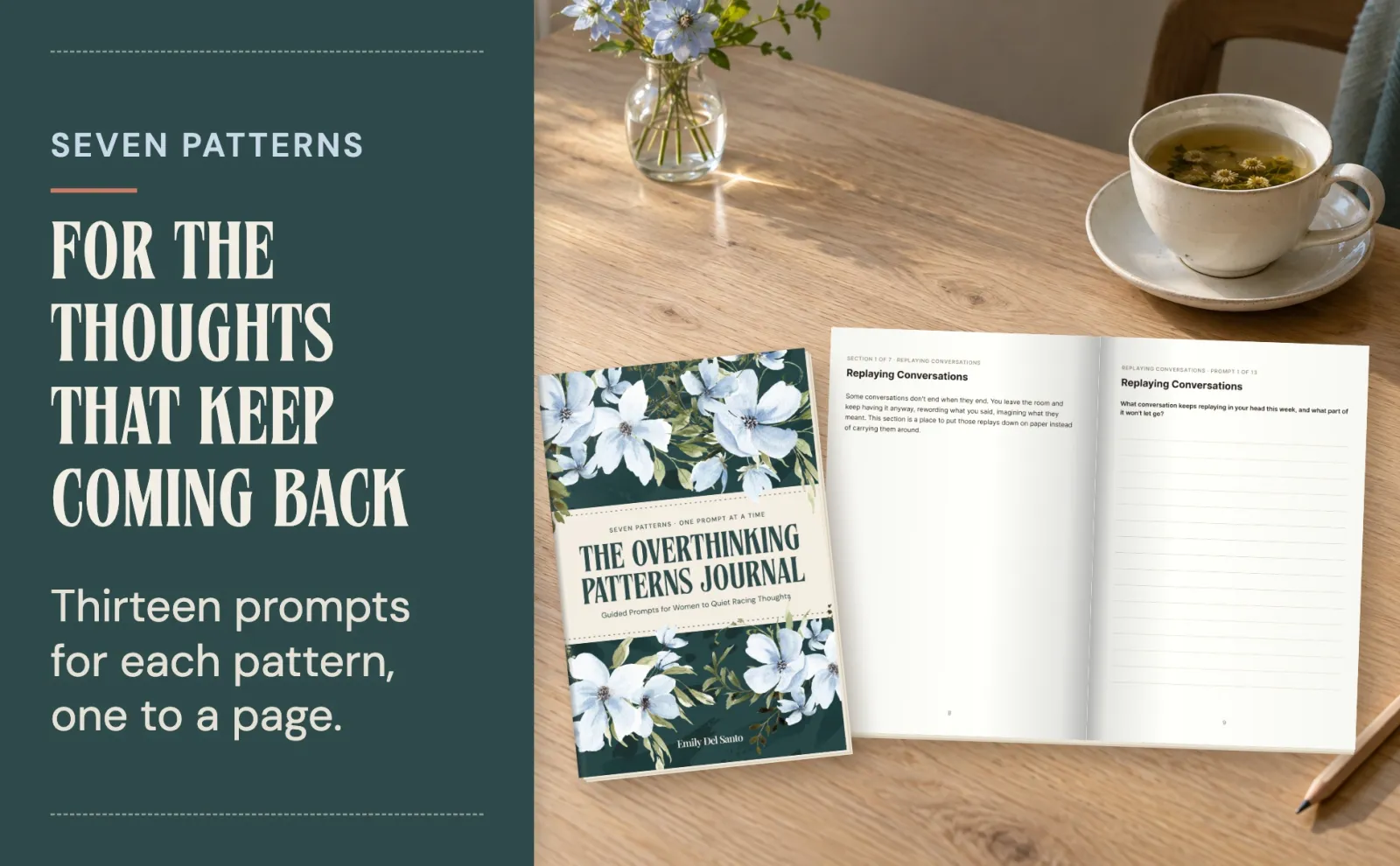
Each section names one pattern, from replaying conversations to imagining the worst, and gives you thirteen specific questions to write through. The pages aren’t dated, so you can begin on any day and go back to a section whenever its pattern returns.
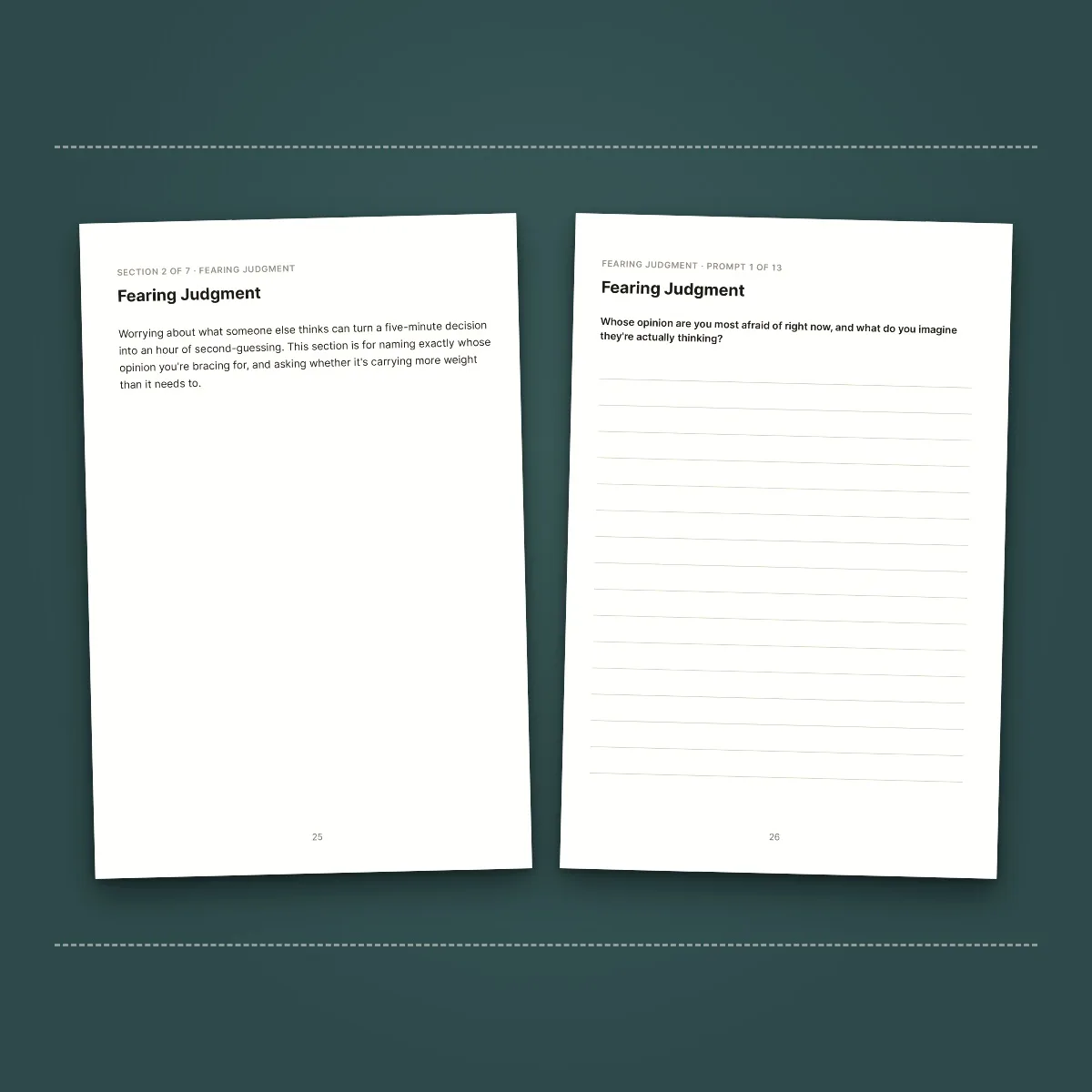
Questions that ask something specific
Every section starts with a short page on the pattern, then gives you one question per page with lines to write on. In Fearing Judgment, the first one asks whose opinion you’re most afraid of right now, and what you imagine they’re actually thinking.
Inside the journal
-
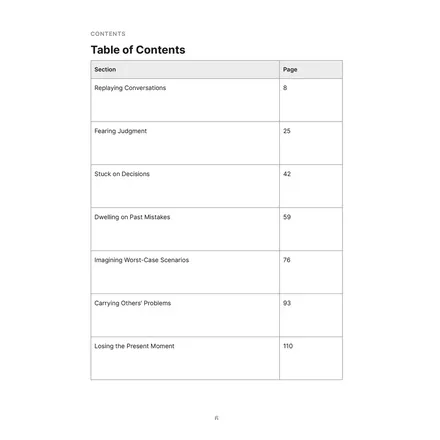
Seven sections
One for each pattern, listed on the contents page so you can turn straight to the one you need.
-
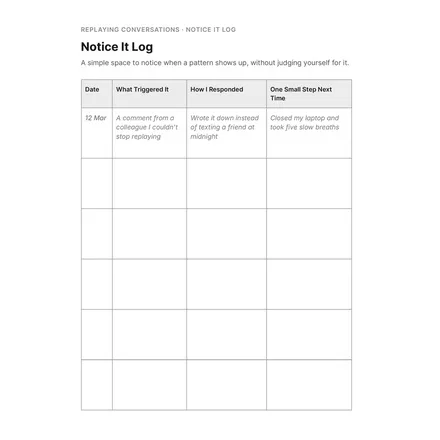
Notice It Log
Write down when a pattern showed up, what triggered it, how you responded, and one small step for next time.
-
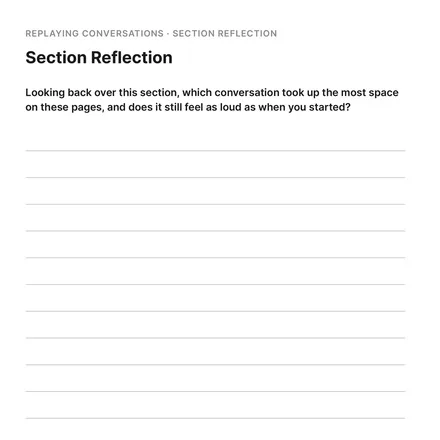
Section reflection
A closing question at the end of each section, for looking back over what you wrote.
-
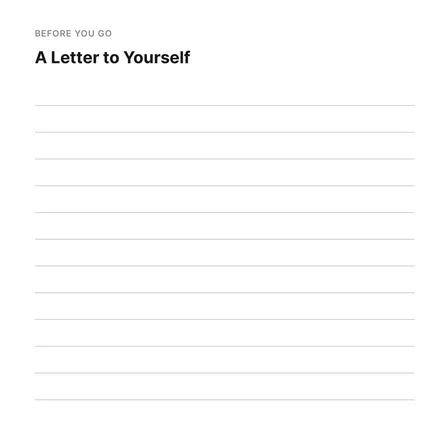
A letter to yourself
A lined page at the close for a letter to yourself.
Compare the books
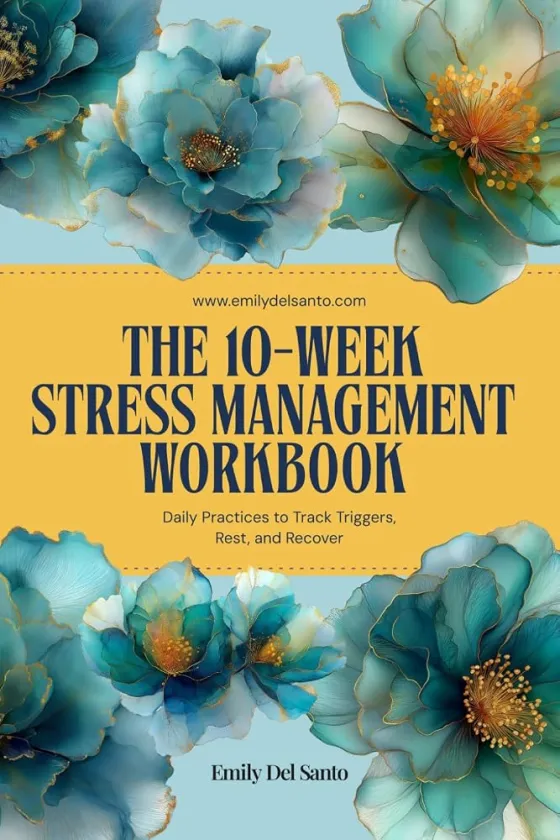
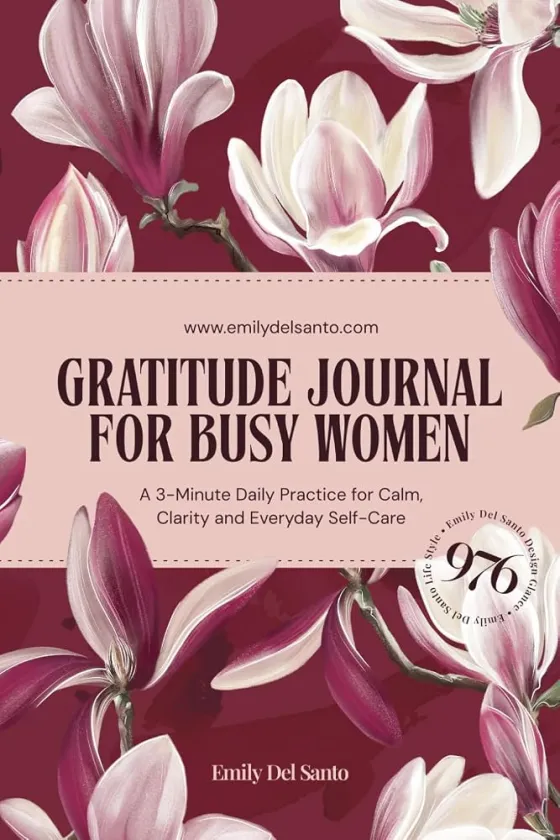
This book 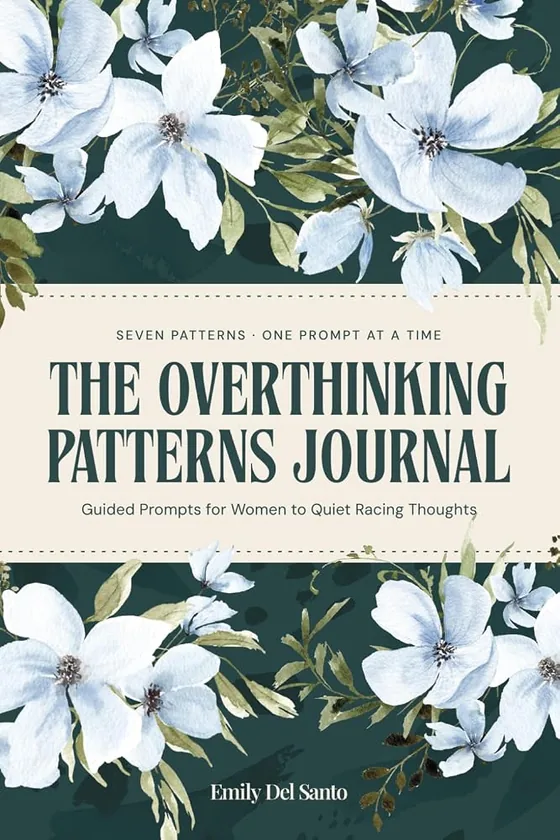 The Overthinking Patterns Journal | The 10-Week Stress Management Workbook | Gratitude Journal for Busy Women | |
|---|---|---|---|
| Made for | Thoughts that keep coming back | Stress from work, caregiving, or family life | A few quiet minutes, morning and evening |
| How it works | Seven sections of guided prompts | Ten guided weeks and a short daily practice | Morning and evening pages for eight weeks |
| Looking back | A reflection page at the end of each section | A mid-point check-in and a final review | Eight weekly reflection pages |
| Book size | Six by nine inches | Six by nine inches | Six by nine inches |
| Pages | 129 | 165 | 150 |
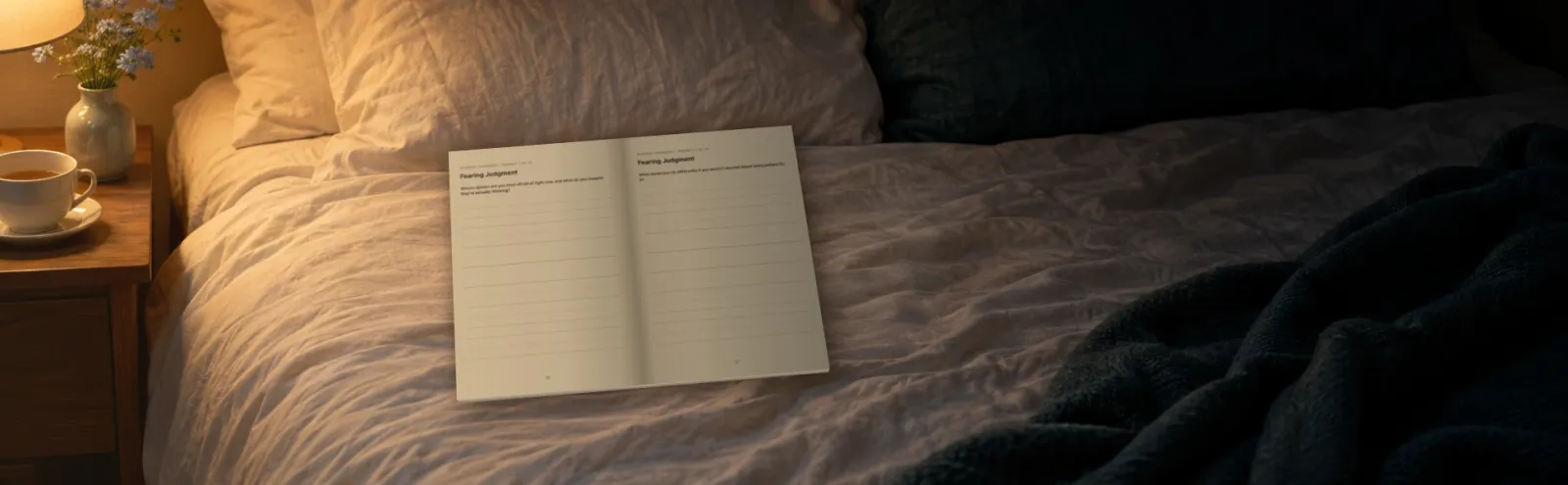
Keep it by the bed
It’s there when a thought turns up at midnight. If you’ve never kept a journal, each page gives you one question to start from, and the opening pages explain how to use it.